
SCTP in
|
|
 Course Fees before GST and Subsidy
Enjoy credit exemptions towards the SIM Graduate Diploma in Business Sustainability
Why a Career in Sustainability and ESG Management in the Built Environment and Manufacturing?
As Singapore accelerates towards its net-zero targets, the built environment and manufacturing sectors are undergoing a massive green transformation. This shift is driving an unprecedented demand for skilled professionals who can navigate ESG frameworks, optimise resources, and implement sustainable practices.
Here is why this sector offers immense growth, purpose, and long-term security:
Exponential Job Growth: Green job opportunities increased by 27 per cent year-on-year as of March 2025, with the strongest surge seen within engineering, construction, and infrastructure.
Highly In-Demand Skills: According to the SkillsFuture Singapore (SSG) 2025 report, 9 out of 12 high-demand, highly transferable skills are in the Green Infrastructure and Mobility Skills area.
Regulatory Drivers: The implementation of stricter energy-efficient standards through the updated Green Mark 2021 scheme requires companies to actively audit and upgrade properties, directly creating more jobs.
AI-Resilient Roles: The sector remains highly secure against automation. Roles rely heavily on manual, on-site expertise (such as building managers) or complex planning that requires vital soft skills (such as project management).
Equipping yourself with ESG and sustainability skills through the SIM SCTP programme positions you at the heart of Singapore’s future economy and sets you up for a resilient, high-growth career.
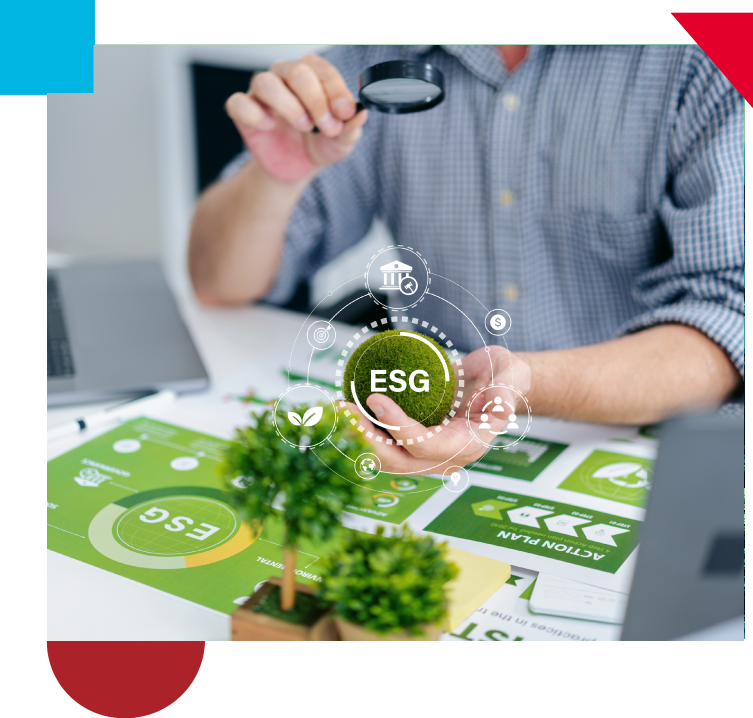
At its core, sustainability in these sectors is about re-engineering how we design, construct, operate, and produce things to minimise environmental impact while maintaining economic viability. It bridges the physical spaces we inhabit with the production systems that supply our global economy.
In practice, this dual-sector focus involves two interconnected pillars:
- The Built Environment: This looks at the entire lifecycle of infrastructure. It means moving away from traditional construction towards smart, energy-efficient buildings that use sustainable materials, integrate renewable energy, and focus on retrofitting existing structures to meet strict modern standards like the Green Mark scheme.
- Green Manufacturing: This focuses on decoupling industrial growth from environmental degradation. It involves adopting circular economy principles (minimising waste by keeping materials in use), upgrading to energy-efficient machinery, and managing carbon accounting across the entire supply chain.
Sustainability and ESG management mean shifting from a “take-make-waste” approach to a circular, low-carbon model where efficiency, carbon reduction, and regulatory compliance drive business value.
Potential Job Roles
Within Green Infrastructure and Mobility
- Sustainability Manager/ Sustainability Project Manager
- Environmental Sustainability Engineer
- Facility/ Building Energy Manager
- Built Environment Project Manager
Within Environmental and Sustainability Management
- Sustainability Consultant
- Circular Economy and Waste Manager
- ESG Analyst/ Practitioner

Fees and Funding
Full Fees (before GST): $19,880.00
GST payable for all funding-eligible applicants1: $536.76
GST payable for others: $1,789.20
| Applicants/ Eligibility | Subsidy Applicable | Fees Payable (After GST) |
| Singapore Citizens and Singapore Permanent Residents < 40 years old | Up to 70% | $6,500.76 |
| Singapore Citizens ≥ 40 years old | Up to 90% | $2,524.76 |
| Singapore Citizens who qualify for Additional Funding Support (AFS)2 | Up to 95% | $1,530.76 |
| Others | Full fees payable | $21,669.20 |
1 As per SSG’s policy, the GST payable is calculated based on 9% of the nett fee payable after baseline funding subsidy of 70%.
2 Individuals must be Singapore Citizens and meet one of the following criteria:
- Long-term unemployed individuals (6 months or more); or
- Individuals in need of financial assistance (ComCare, Short-to-Medium Term Assistance (SMTA) recipients or Workfare Income Supplement (WIS) recipients); or
- Persons with Disabilities
Singaporeans aged 25 years and above may use SkillsFuture Credit (opening and top-up) and Additional SkillsFuture Credit (Mid-Career Support) to offset the out-of-pocket course fees for SCTP.
From 1 May 2024, a SkillsFuture Credit top-up of $4,000 will provide greater support for mid-career Singaporeans aged 40 years and above to further offset out-of-pocket course fees for the SCTP. Visit https://www.skillsfuture.gov.sg/level-up-programme for more details.
Learners may be eligible for up to $3,000 monthly SkillsFuture Mid-Career Training Allowance (Full-Time Training Allowance)
Visit https://www.myskillsfuture.gov.sg/content/portal/en/career-resources/career-resources/education-career-personal-development/SkillsFuture-Mid-Career-Training-Allowance.html for more information.
| Course Modules | Course Duration | |
| Sustainability Fundamentals | ||
|---|---|---|
| Role and Purpose of the Sustainability Manager | 12 Hours | |
| Sustainable Business Model Innovation (Synchronous E-Learning) | 12 Hours | |
| Sustainability Core | Sustainability, Frameworks, Assessment and Enterprise Certification (Synchronous E-Learning) | 12 Hours |
| Circular Economy and Waste Management (Synchronous E-Learning) | 12 Hours | |
| Applied Carbon Markets, GHG Accounting & Climate Resilience | 8 Hours | |
| Life Cycle Assessment for Sustainable Organisations | 16 Hours | |
| Systems Thinking (Synchronous E-Learning) | 12 Hours | |
| Design Thinking Practice (Level 3) (Synchronous and Asynchronous E-Learning) | 20 Hours | |
| Sustainable Finance and Reporting | Digital Technologies for Sustainability (Synchronous E-Learning) | 18 Hours |
| Sustainable Finance and Risk for Non-Finance Professionals | 16 Hours | |
| Business Sustainability Performance and Reporting with ISSB Standards | 21 Hours | |
| Project Management | Stakeholder Engagement and Management L4 (Synchronous and Asynchronous E-Learning) | 20 Hours |
| Project Management for Sustainability Managers in Built Environment | 27 Hours | |
| Certifications | ISO14001 (Environment) Internal Audit Certification | 18 Hours |
| Certified Sustainability (ESG) Practitioner Advance Certification Preparation | 24 Hours | |
| Capstone Project | Capstone Project for Sustainability Managers in Build Environment | 22 Hours |


built environment or manufacturing industry